In short
A car’s badges name its maker, model, trim and sometimes engine or drivetrain, a layered claim about what the car is. They sit in predictable places, they move between generations, owners remove and swap them, and the shape of the car outranks any emblem. Confirm important claims through the VIN and paperwork, not the boot lid — this guide shows how to read each layer and when to stop trusting it.
The badge family: marque, model, trim, engine, drivetrain
Badges answer different questions, so read them as layers rather than one name:
- Marque: the brand emblem, usually the largest badge on grille and tailgate.
- Model: the nameplate, “Golf”, “Camry”, “500”. The most useful single badge for identification.
- Trim: the version, letters or names that indicate spec level, sometimes the only clue to equipment.
- Engine / powertrain: displacement or technology badges (“2.0”, “Hybrid”, “TDI”), which makers apply inconsistently.
- Drivetrain: markings like “4WD”, “quattro” or “xDrive” describing which wheels are driven.
What each badge actually encodes is maker-specific: a number on the boot lid may be litres, kilowatts, a marketing index, or nothing mechanical at all, and letter combinations like “GTI” or “Hybrid” only mean what that maker defined. When a specification badge matters, decode it against the maker’s own naming scheme rather than a generic pattern.
Letterforms carry dates, too: makers restyle their wordmarks with each generation, so chrome script usually signals an older car than today’s flat sans-serif emblems. A badge’s style is itself a generational clue — worth noting before you trust what it says.
If you are learning what the emblems look like, Wikimedia Commons’ logos-of-automobiles category collects maker marques under stated licences — useful for matching an unfamiliar grille emblem to a brand. Individual files carry their own licence terms; check each before reusing.
Where badges sit — and where they moved
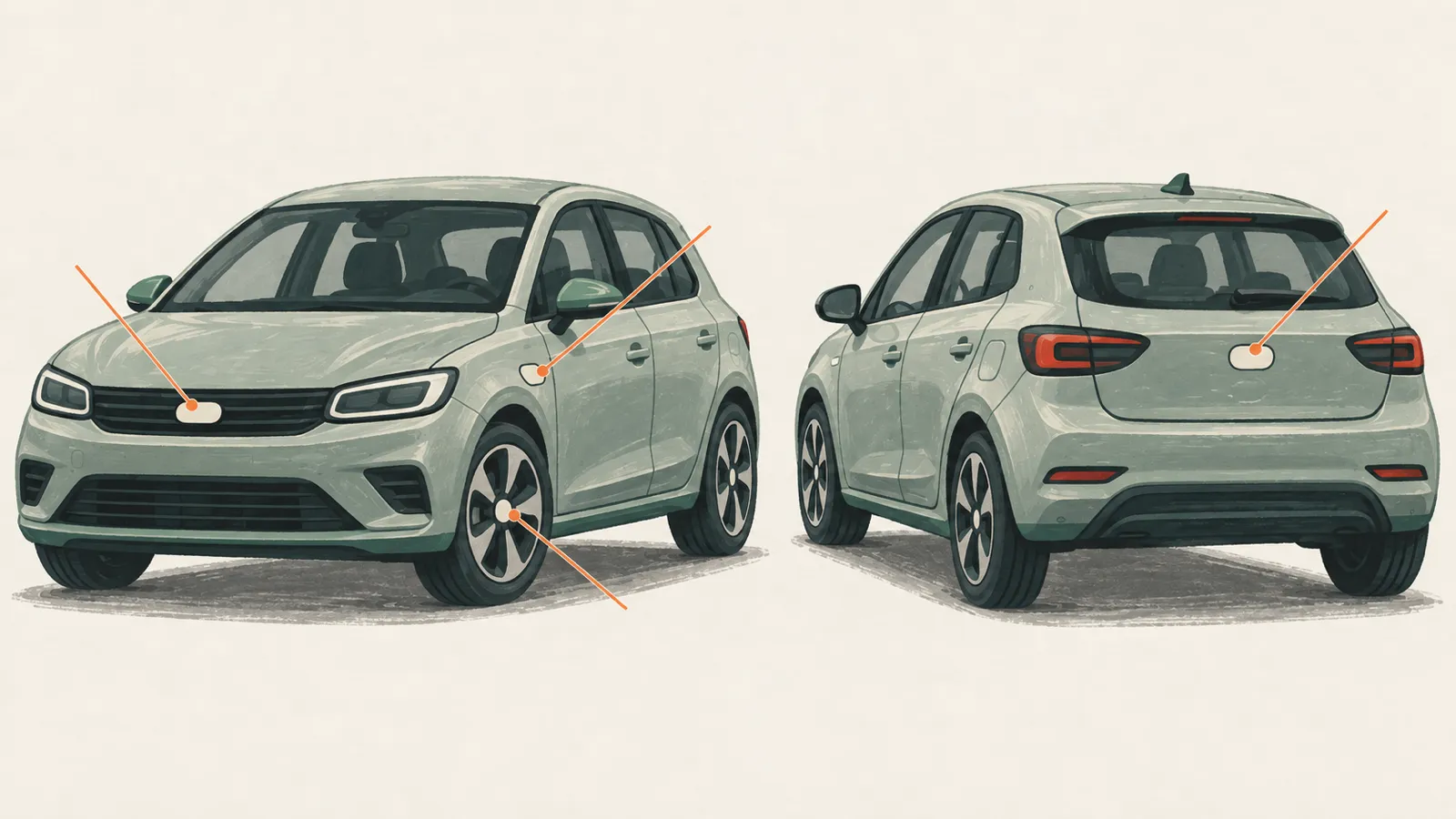
Badge placement is conventional, not standardised. The classic layout: marque centred on the grille and tailgate, model nameplate on the left or right of the tailgate, trim or engine opposite. Variations matter for identification:
- Front wings / fenders: trim and engine badges often live on the sides rather than the tail.
- Wheel centres and steering wheel: repeat the marque; useful when body badges are missing.
- C-pillar or window line: some makers badge special versions there.
- Doors and interior: trim names sometimes appear on the sills, dashboard or seat backs when the tailgate is bare.
Placement also drifts with each generation, so a model nameplate that sat on the right of the tailgate can move left or centre after a redesign, and new generations often shrink or simplify their emblems. When a badge seems “wrong”, check whether it moved before calling it suspicious; the generations guide covers how each redesign reshuffles the details.
Figure 1 · The badge zones
Factory debadging vs owner debadging
Two kinds of blank tailgate exist. Some makers offer factory debadging, a delete option, historically popular on European executive cars where a badge advertised a smaller engine than the buyer wanted shown. Owner debadging is the same idea applied with dental floss and adhesive remover. Model and engine badges come off cleanly, and the result is indistinguishable from the factory option at a glance.
Either way, a debadged car is not unidentified; it just moved the work from the tailgate back to the body. Read the silhouette, face and lamps first, exactly as the photo walkthrough describes, and treat the missing badge as a styling choice rather than a warning. Do note the flip side when buying: a blank tailgate that conceals a base engine also conceals it from the next buyer, and sellers can understate as well as overstate, so the paperwork check matters either way.
Swapped and aftermarket badges
Badges move between cars easily — and they are cheap to buy. Owner communities field badge questions constantly: identification forums like r/whatisthiscar regularly separate genuine emblems from stuck-on claims, and their threads are a practical education in how often a badge overpromises. Community consensus is useful experience, not authority — but the pattern it documents is real:
- Upbadging: a base car wearing a performance trim’s badge (an M or AMG emblem without the bodywork).
- Rebadged twins: factory cousins sold under different marques; a swapped grille emblem can make one claim to be the other.
- Aftermarket emblems: novelty or “sport” badges with no corresponding factory specification.
- Out-of-place badges: an emblem in the wrong position or typeface for that year, exposed because factory placement drifts between generations.
A badge you could fit yourself in five minutes is evidence the same weight as a sticker — supporting, never decisive, and always subordinate to what the body and the records say.
When the badge and the body disagree
The body was stamped at the factory; the badge was stuck on by someone. When they conflict, trust the body. A sedan wearing the nameplate of a hatch-only model, a grille emblem from a different brand on unchanged bodywork, or trim badges that don’t match the visible specification are all mismatch tells.
Mismatch is not always deception (owners customise), but it always demotes the badge to noise. The quieter traps are subtler: a dealer-added accessory emblem, a second badge layered beside the factory one, or a trim nameplate that was correct for the market where the car was first sold but meaningless where it now lives. Let the shape, proportions and face carry the identification, then treat the badge as one more detail to explain.
When you photograph a badge, take the whole tailgate rather than a tight crop of the emblem. Placement, typeface and neighbouring badges all help date the claim — a lone emblem close-up discards exactly the context that reveals a swap.
Confirming with records, not emblems
Most of what a badge claims — marque, model, engine, drivetrain — is also recorded against the vehicle’s identifier, where it cannot be peeled off. For US-market cars, the NHTSA vPIC decoder reports the manufacturer-submitted make, model, body class and engine fields for a VIN, but trim is encoded unevenly — a missing trim field leaves the badge’s claim open, not confirmed. Elsewhere, the registration document and manufacturer or dealer records serve the same role. When the identifier cannot settle a trim or equipment claim, ask the manufacturer or its local representative for the VIN-based build specification, then compare it with the paperwork and the equipment physically present.
A seller who answers a specification question by pointing at a badge rather than paperwork has the argument backwards: the badge is the claim being tested, not the evidence for it.
Sources and what they cover
Sources last checked . Community sources document real owner behaviour but are informal; official records outrank them.
- r/whatisthiscar — a large car-identification community whose threads document debadging, upbadging and badge-swap practice.
- Wikimedia Commons: Logos of automobiles — licensed reference images of maker marques; individual files carry their own licence terms.
- NHTSA vPIC VIN decoder — manufacturer-reported make, model and specification fields for US-market vehicles.
- NHTSA interpretation nht79-1.20 — US VIN rules do not require every sales version or trim level to be encoded separately.
Spotted an error? Tell us — include the page address and what looks wrong.